

In today’s day and age, especially with social media, podcasting and AI, people are much more informed about all things wellness and personal development.
We know about attachment styles, triggers, nervous system regulation, psychedelics, the neuroscience behind the fight-or-flight response, etc. Much more people are in coaching or therapy than ever before — meditating, listening to podcasts, reading books and even going to a retreat or two a year.
And yet, what I see is:
1 — we’re learning a lot of tools for regulation (and that’s needed and valuable) but we rarely go the root of our challenges.
2 —If we gain insight and awareness, we’re lacking a clear path to integrating it to create a real embodied change.
I know that, even after being in therapy for a long time, or working with plant medicine and having a massive awakening experiences, people still find themselves:
Overreacting to feedback or avoiding conflict
Collapsing under pressure or overworking to the edge of burnout
In challenging relationship patterns with intimate partners, co-founders, boards or teams.
Of course, we would never be ideally regulated, “healed” or perfect - we’re only human and in my experience most of us haven’t done the actual fundamental work.
We want advanced leadership development, self-actualization, and “high performance” without first doing the ground work (and the most difficult of all) of actually maturing emotionally.
As I’ve said many times before (if you follow me on social media), most adult struggles trace back to two things:
1) Unmet core needs —> safety, attunement, acceptance, autonomy, love.
2) Protective adaptations we developed to survive those unmet needs —> the perfectionist, the achiever, the appeaser, the caretaker.
Those adaptations once kept us safe. Now they’re the very patterns that block intimacy, clarity, authenticity, and vitality.
What’s required is doing the work of childhood de-conditioning.
For me, this is the ABC of maturation. The groundwork. The thing we should all start with, before the plant medicine retreats, the biohacking, and all the other hype in the wellness and new-age spiritual circles.
The Three Levels of True Transformation
After working in the personal development space for 10 years as an executive coach and experiencing different practitioners and modalities in my own personal work, I’ve come to believe that sustainable transformation requires work on three levels:
1. Therapeutic – Childhood de-conditioning and inner child work (Primal)
Exploration of the first 0–7/10 years of life (where our unconscious beliefs about who we are and our nervous system got wired)
Meeting and integrating early (developmental) trauma, conditioning, and survival strategies
Reclaiming the inner child as the source of our potential and aliveness
2. Family systemic level – Lineage and constellation work
Seeing the bigger context in which you were born into
Understanding how ancestral patterns, loyalties, and unresolved family stories live through you
Stepping into your own place, instead of unconsciously carrying what isn’t yours or occupying a role that isn’t yours
3. Developmental – Coaching
Creating a vision for your life and leadership
Building new behaviors, commitments, and structures (including working with your body (nutrition, movement) and environment) to make your vision a reality.
Stepping into your power as an adult who can choose and create a life of authenticity and alignment.
Most people start at level 3: coaching.
Coaching is powerful. I’m a coach, and I believe in it deeply.
But without the first two layers, it’s like trying to build a house on unstable ground.
You set goals, but your subconscious beliefs block you from achieving them.
You design habits, but you keep falling back into the same patterns.
You try to shift your mindset, but your nervous system is still organized around childhood survival, so you keep reacting as if you’re hijacked. Trust me, I’ve been there. I also started with the coaching paradigm myself.
You can bio-hack and optimize all you want, but until your self-worth becomes solid, you will still lack the aliveness you crave in your life.
Your potential doesn’t live in your “optimized longevity protocol” or your “future self.” It lives in the inner child you had to abandon to survive. It’s her (him) that holds it.
Until you meet that child, coaching, your meditation practice, and plant medicine ceremonies have nothing solid to stand on.
It’s very enticing and cool to try the manifestation techniques, vision boards, thinking positively, the gratitude journals, or “holding the vibration that will attract your dream partner and everything else you want in life”.
These are fun and helpful exercises, but ultimately, you create your life based on your conditioning and subconscious beliefs. This is the lever that can change your entire life.
Enter: Primal Therapy
Primal Therapy is a deeply transformative process that explores the first 0–10 years of your life to uncover and heal early developmental trauma and conditioning.
It is not talk therapy and not “new age.” It’s not about endlessly analyzing and processing your childhood or blaming your parents for everything.
Rather, Primal is a grounded, experiential approach that integrates elements of:
Gestalt
Regression
Systemic constellations
Somatic work
Reflection and journaling
The goal is to reach the root of long-held emotional patterns, not just manage their symptoms. And I say “manage” because we have a lot of talk about “regulation” practices, that are incredibly useful, but incomplete without the actual understanding of how you developed your personality from an early age.
In practice, primal helps you to:
Reconnect with younger parts of yourself that had to adapt, perform, please, disappear, or fight to feel safe.
Allow emotions that were never safe to feel (grief, rage, fear, longing, sadness), to finally move, be felt and complete.
Reorganize your nervous system from the inside out, instead of just learning to “regulate” it from the outside.
You’re not trying to become a more sophisticated manager of your coping mechanisms, but rather learn how to be compassionate and reparent yourself, how to recognize your inner child and its needs and learn ways to approach it from the place of the adult.
You’re inviting the part of you that never got to fully mature to finally have that chance.
How Primal Differs from the Hoffman Process (and How It Has Evolved)
I always make the reference with Hoffman, because it’s very well advertised and becoming more popular because of all the celebrities doing it. It’s truly amazing that this work exists and truthfully in my opinion it is the most difficult work for most of us. That’s because it’s deeply emotional - a territory we’re truly afraid to traverse. Most people can get behind meditation and spirituality but Primal works with the deepest, rawest aspects of us - our emotional world. We’ve all seen deeply spiritual people still showing up emotionally immature, haven’t we?
Primal is similar to Hoffman on many fronts: both are immersive, both work with childhood patterns, and both aim at deep emotional release and integration.
I personally haven’t done Hoffman, but some really close friends have and I know what the process looks like in great detail. Here are some of the main differences:
Format: Hoffman is a group-based, intensive retreat. Primal can be both, a retreat, or, as I practice it - a 10-session, 1:1 process. Each session builds on the last, over 2.5–3 months, creating a highly personalized arc.
Customization: Because it’s intimate and tailored in the 1:1 format, primal allows us to go precisely where your system needs to go, at your pace, with continuous integration into your current life and leadership.
When it comes to lineage and evolution, they were both established in the 60s.
Originally developed by Dr. Arthur Janov, Primal Therapy has evolved significantly since its early days. The early version was often associated with dramatic catharsis, screaming and intense releases.
Over time, through the influence of different teachers and communities (including Osho and his community, who brought a spiritual dimension to the work), Primal has become more refined, resourced and integrative.
In my own training with my teacher, Elitsa, I’ve experienced Primal as truly a fundamental system for transformation that addresses:
childhood, adolescence (teenager years), and adult relationships (there are Primal 1, 2 and 3).
combines emotional release with deep witnessing and understanding what is being released and shifted.
teaches you how to access your resources as an adult and learn how to reparent and meet the needs of the child aspects of you, so that you stop seeking someone else to do that.
honors the psychological, systemic and spiritual dimensions of being human on the path of growing up.
Why Neuroscience Isn’t Enough
We live in a time where everyone can explain what happens in the brain during a trigger or fight-flight-freeze-fawn.
We know about the amygdala and prefrontal cortex, we talk about nervous system regulation, vagus nerve, and do breathwork. This is useful. I love understanding the physiology of our system too. However, information doesn’t equal transformation.
You can know exactly what’s happening in our nervous system and still be completely hijacked by a 5-year-old part of you in a board meeting, a public speaking presentation or in a conflict with your romantic partner.
In many ways, our obsession with neuroscience is another way to stay in the head/mind and avoid feeling our emotions. I get it, emotions are scary. I also tend to live in my head, analyzing, rationalizing etc. It’s much safer to talk about the brain than to actually enter the body and meet the grief, rage, terror, and longing stored there. Primal work is an invitation to go where the mind cannot go alone.
Now that we’ve covered what this modality is, I want to get out of the abstract and into the actual experience.
How This Work Changed My Life
I’m convinced that we can’t understand our nervous system and life really, outside the context of our childhood. In my own Primal work, I began to unpack my early conditioning and see how it has shaped my entire life. As a child, I became disappointed in my father (he was dealing with his own challenges and was often absent as a parent) and without the resources to process that hurt, I grew into an adult with almost zero tolerance for disappointment in relationships: when someone let me down, I would cut them off rather than stay and repair.
My therapist (and teacher) once said to me, “A real relationship truly begins after the disappointment.”
Disappointment is inevitable - we’re human, we’re messy, we make mistakes. The moment someone lets us down is also the moment we have a chance to repair and deepen the relationship. But for the little girl I once was, disappointment felt impossible to process. Children don’t have the tools to work through those ruptures, so my system learned that disappointment meant the end, not the beginning, of connection.
At the same time my relationship with my father made it difficult to respect authority in general. I couldn’t tolerate being told what to do, so naturally I oriented towards starting my own business and not working for someone else. What I had been calling “my nature” was, in many ways, my nervous system organizing itself around early experiences where I couldn’t trust the “adults”, which led to becoming strong and hyper-independent. On top, I’m a Capricorn rising and the first-born - you get the idea.
Going into personal development early on, I found out that no amount of mindset work or talk therapy could shift some of these patterns, because they are not conceptual. They are pre-verbal, emotional, and somatic.
This work has had the most impact out of everything I’ve studied and practiced. It was the piece missing, so all the rest of insight I’ve gathered on my journey can finally make sense.
It has allowed me to:
Feel more at home in my body
Trust my own intuition and boundaries
Learn what it’s really like to love and care for myself
Strengthened the resources of the adult in me - the one who will never abandon, set conditions for love or allow neglect or a lack ever again.
Become more authentic and grounded
Connect with my creativity - writing, dancing, singing, ideating, taking bold action in my work
Work and create from a place of confidence, curiosity and play
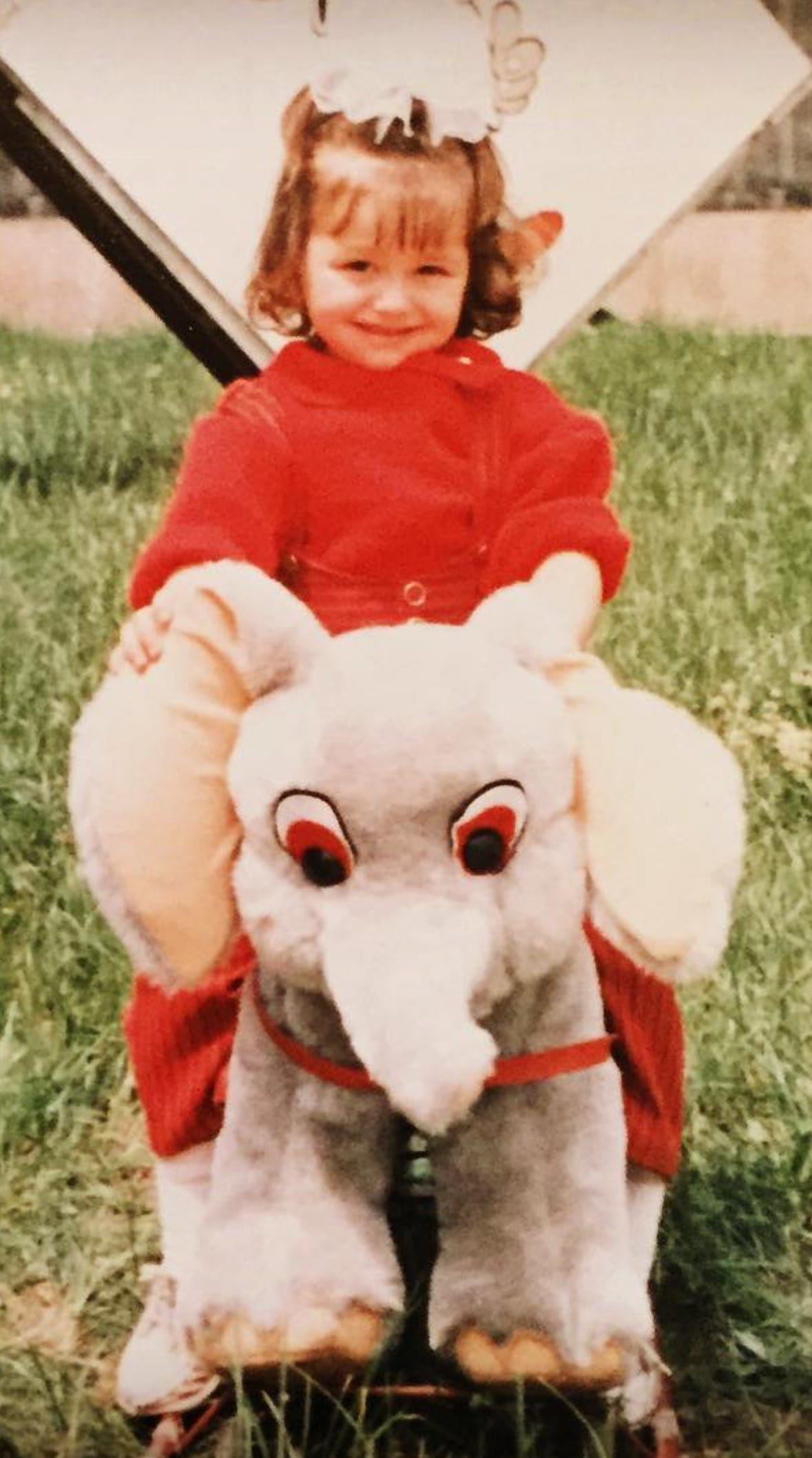
This work has the capacity to unveil so much, just by stepping into the process.
I’ll give you another powerful example from experience, so you can recognize how transformation happens in real time. (if you pay attention and observe your process)
At the most recent Primal retreat I attended, I happened to experience a profound moment of transference: unconsciously projecting old relational patterns onto people in the present. During a session, one of the facilitators crossed my boundaries - constantly interrupting my process and failing to provide the safety essential in deep therapeutic work.
I knew what I needed to do. I was the adult now, who can set the boundaries the child never could. After days of “maybe it’s not that big of a deal”, I gathered courage to share my experience and offered feedback, but instead of receiving it, the facilitator cut me off. He refused to listen and dismissed my experience. He could not, or would not, take responsibility for his part. I encountered the all-too-familiar dynamic of avoidance and weakness in the face of accountability.
This is a pattern I have seen in my life before: experiencing men who are unable or unwilling to take responsibility.
Again and again, we replay our core themes, hoping that this time “they” will show up differently. This is the child in us, wanting to finally resolve what wasn’t possible back in the days.
What made this experience significant was that
a) I addressed my needs directly. I stood up for my inner child, confronted the facilitator, and named the ways his actions disrupted my process. This was a powerful act of self-advocacy, something I couldn’t have been able to do as a child.
b) I saw clearly that I still need to work and integrate the “responsibility” piece.
Want to go deeper? - in Part 2, I share the exact process and tools I use to integrate these patterns - including step-by-step guidance, a reflection prompt, and a practical exercise to help you in your own journey of integration.
If you’re ready to come into this work. We just opened doors to the first one in Miami (and it the US really) - May 21st - 25th - More info HERE
As a thank you for your support, paid subscribers receive 10% off all 1:1 sessions and packages. To redeem, just mention your Substack subscription when you reach out.
Find me on LinkedIn and on IG here and my website is here.
See you around!
Building a house on unstable ground- love how you put that!
Super interesting! Is this in some way similar to Internal Family Systems?